

Category Archives: Longevity

Brain Health Benefits of Yoga Practice

Despite being an exercise performed for many centuries in Eastern cultures, yoga has become increasingly popular over the past few decades among the Western population and alongside it, an exponential increase in research. People are drawn to the practice due to its multitude of mental and physical benefits, which include relaxation, muscle stretching, and an increased feeling of mindfulness. The health benefits of the physical exercise have been well established, yet there is a lack of research concerning the impact of yoga practice on the brain.

Today, yoga is the most popular form of complementary therapy practiced by over 13 million adults, with 58% of adults citing maintenance of health and well-being as their reason for practice per data reported by the National Center for Complementary and Integrative Health (NCCIH).

Recently, yoga has gained increased attention in the scientific community as well, as a research area of interest among exercise neuroscientists due to its promising potential therapeutic benefits with potential to combat widespread increases in the prevalence of age-related neurodegenerative diseases. Few studies have investigated the benefits of yoga on brain health yet recent research from the University of Illinois at Urbana-Champaign aims to analyze current literature related to yoga practice and its documented positive effects on brain structure and function.

Yoga and the Brain 

The team of researchers analyzed 11 studies of the relationships between yoga and brain health including the impact of yoga practice on brain structures, function, and cerebral blood flow. Of those, 5 trials engaged participants with no prior yoga experience in one or more yoga sessions per week over a period of 10 to 24 weeks to compare brain health before and after the intervention. Meanwhile, the remaining studies measured differences in brain health between participants who regularly practiced yoga and those who did not.

To determine variations in brain structure and health, each study utilized brain-imaging technologies including MRI, functional MRI, or single-photon emission computerized tomography to analyze the impact of Hatha yoga practice – which incorporates body movements, meditation, and breathing exercises.

Positive Neuroprotective Effects

Overall, researchers found that the studies reported a beneficial effect of yoga practice on both the structure and functioning of the hippocampus, amygdala, prefrontal cortex, cingulate cortex, and brain networks. As many of these regions are known to be related to age-related atrophy, the early evidence is promising and implicates that regular yoga practice could work to mitigate age-related and neurodegenerative diseases.

“For example, we see increases in the volume of the hippocampus with yoga practice,” lead author Neha Gothe from the University of Illinois said. “Many studies looking at the brain effects of aerobic exercise have shown a similar increase in hippocampus size over time.”

In addition, the review of the studies found that brain changes related to yoga practice were linked to improved cognitive performance and measures of emotional regulation.

Changes in Brain Structure

According to Gothe and her colleague Jessica Damoiseaux psychology professor at Wayne State University, many of the studies were exploratory and not conclusive. Despite this, the researchers suggest their findings underline important brain changes associated with regular yoga practice, including amygdala growth which may be directly related to improved emotional regulation in yoga practitioners.

“The prefrontal cortex, cingulate cortex and brain networks such as the default mode network also tend to be larger or more efficient in those who regularly practice yoga,” Damoiseaux explains. “Like the amygdala, the cingulate cortex is part of the limbic system, a circuit of structures that plays a key role in emotional regulation, learning, and memory.”

Regular yoga practice may help improve the cortisol stress response; researchers found that participants who practiced yoga for eight weeks had an attenuated cortisol response which also contributed to improved testing performance in cases of decision-making, task-switching, and attention span. Overall, researchers believe that the positive implications of yoga on brain structures and emotional regulation improve total brain functioning and thus, may have neuroprotective effects.

Not only does a regular yoga practice have well-documented physical health benefits, but it appears to also promote healthy brain function. However, researchers caution that more research is needed in this field to uncover the mechanisms underlying the evident brain changes, recommending large intervention studies that engage participants in yoga practice for long periods of time and allow for comparisons with other forms of exercise.

“The science is pointing to yoga being beneficial for healthy brain function, but we need more rigorous and well-controlled intervention studies to confirm these initial findings,” Damoiseaux concludes.

Changes in Gut Microbiome Associated with MS Treatment

As the most widespread disabling neurological condition in young adults, multiple sclerosis (MS) affects approximately 1 million people in the United States and up to 2.3 million across the globe. Although researchers have not yet discovered the underlying causes of the condition or the reasons behind its unpredictable progression, there is an increased focus on the role of the gut microbiome in its development.

Prior research linking gut flora and multiple sclerosis has shown differences in the types of gut bacteria found in individuals with multiple sclerosis (MS). Patients with MS tend to have more archea –  a microbe responsible for inflammation – and less butyricimonas – a microbe with anti-inflammatory properties – compared with individuals without the condition.

New research implicates that patients with multiple sclerosis exhibit changes in gut bacteria composition after being treated with the disease-modifying drug ocrelizumab (Ocrevus).

Effect of Medication on Gut Microbiome

Disease-modifying medications tackle MS by depleting B cells, leading researchers to hypothesize that ocrelizumab could normalize the phenotype and metabolic profiles of gut bacteria thereby promoting an anti-inflammatory immune environment. As part of the ongoing trial, the research team is enrolling patients with new-onset multiple sclerosis and evaluating longitudinal samples of paired blood and stool with advanced techniques – including IgA-Seq, a novel tool that allows the differentiation of immune-reactive bacteria from IgA-uncoated bacteria.

Changes in Gut Bacteria

According to preliminary findings from the ongoing study, the normalization of certain components of the fecal microbiome in MS patients occurred at 1 month after ocrelizumab treatment, compared with baseline measurements. The team’s initial results are based on a cohort of 8 patients with MS and 5 control group participants.

Several members of the MS group showed very high IgA-coated indices for selected bacteria in the butyrate-producing Lachnospiraceae family at baseline. Following ocrelizumab treatment, these patients showed a reduction in the IgA coating index for butyrate producers. Furthermore, butyrate was significantly decreased at baseline in the MS group compared with levels found in the healthy control group. However, these changes did not last and the difference in butyrate levels dissipated after treatment was ceased. No differences were observed in acetate and propionate values.

Implications of Bacteria Changes

“Our data suggest that a subset of butyrate-producing gut bacteria is recognized as pathogenic by the immune system of untreated MS patients, based on high levels of IgA coating,” the researchers told Medscape Medical News, “This phenomenon could impact the amount of butyrate produced and affect the differentiation of circulating immune cells.”

The reduction of the IgA coating index of butyrate-producing bacteria as a result of ocrelizumab treatment points to its potentially significant role in the efficacy of B-cell depletion in MS patients. “The data also suggest that “changes in the gut microbiota may comprise part of the mechanism of action for a variety of MS disease-modifying therapies, including ocrelizumab,” lead author Erin Longbrake, MD, PhD told Medscape Medical News.

Due to the small scale of the study, its results are difficult to generalize; however the preliminary findings add to a growing body of evidence supporting the critical relationship between the gut microbiome and multiple sclerosis pathology. The research team is currently enrolling additional participants to investigate this connection further and plans on expanding its analysis to include long-amplicon sequencing and metabolomic analysis.

With about 200 new cases of multiple sclerosis diagnosed per day in the United States, there is an acute need for a better understanding of its underlying mechanisms. Identifying how these changes in the gut microbiome occur and improving the understanding of the implications of pharmacologic therapies could lead to the development of more targeted, personalized interventions aimed toward correcting specific pathologic modifications.

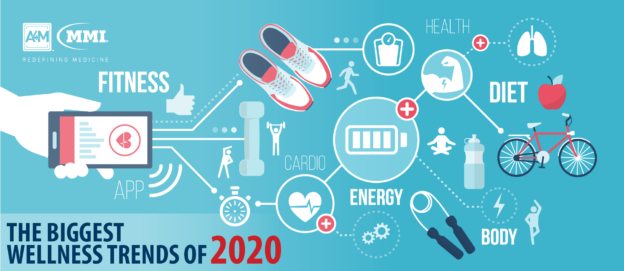
The Biggest Wellness Trends of 2020

Last year, the rise of cannabidiol (CBD), intermittent fasting, meditation, and many other health and wellness trends dominated the $4 trillion global wellness industry. As this segment of the market continues to grow rapidly, technologic advances, emerging clinical findings, and shifting priorities are likely to influence burgeoning wellness trends for the coming year. Recently, experts from across the world gathered to forecast the biggest health trends that will take over the global wellness industry in 2020 as part of the Global Wellness Summit (GWS).

Alongside a focus on fixing disrupted circadian rhythms and mental health-promoting devices, the most significant projected trends for the forthcoming year are outlined below:

Circadian Health Optimization

According to one of the world’s leading experts on circadian health and associate professor of medicine at Harvard University Dr. Steven Lockley: “The absolute key to healthy sleep and circadian rhythms is stable, regularly-timed daily light and dark exposure—our natural daily time cues.”

Today, humans have incredibly disrupted circadian rhythms as a result of increased screen time and travel, rising stress levels, and a 24/7 culture. Current research suggests that circadian rhythms influence a variety of bodily functions ranging from hormonal fluctuations to body temperature regulation. Most importantly, they can significantly influence sleep patterns, impacting productivity and health.

As part of the solution, the concept of circadian rhythm optimization centers around adjusting the daily schedule, dietary patterns, and environmental cues to sync up with the body’s internal clock. Experts at the Global Wellness Summit predict an increased amount of people shifting their work schedules in accordance with their chronotypes, which The Sleep Foundation describes as the natural pattern by which people sleep and wake best, in an effort to optimize performance and productivity.

“Given that most of our body systems express circadian rhythms, ensuring proper alignment of our internal circadian clocks,” Dr. Lockley further explains, “starting with the management of lighting, will have major impacts on human health.”

Mental Health Technology 

The National Institute of Mental Health estimates that over 42% of 46.6 million adults with mental illness in the United States received mental health treatment in 2017. In addition, the growing patient base of Millennials is more likely to address mental health concerns than previous generations, with about 70% saying they feel comfortable seeking help. Wellness technology companies have begun to capitalize on this increased acceptance and technological advancements by developing digital therapeutic products and services.

Tech-savvy individuals are increasingly using virtual therapy apps – such as TalkSpace and BetterHelp – and digital support groups to combat modern-day issues including burnout, loneliness, depression, and anxiety. The behavioral health software market is now projected to reach $2.31 billion by 2022 and as we shift toward a more holistic approach to wellbeing, will likely continue growing.

As part of this rising trend, mental wellness wearables are growing in popularity with the introduction of meditation headsets that measure heart and breathing rates and wearable biosensors that monitor physiological signals throughout the day. These devices aim to improve stress levels, sleep patterns, and daily habits based on biologic metrics directly obtained throughout the day. For example, Sentio Solutions recently announced a new product, Feel, which is an emotion-sensing wristband with integrated biosensors which measure users’ physiological signals. Paired with an accompanying cognitive-behavioral therapy (CBT) app, it aims to help those suffering from anxiety and depression by offering on-demand support.

However, many of these technologies are still in the early stages of clinical trials and require further investigation before they can be released.

Japanese Wellness 

In 2017, Japan had the largest per capita ratio of centenarians in the world with 67,824 people aged 100 and above. The country is known for the longevity of its population, with up to 50% of Japanese citizens born in 2007 expected to reach the age of 107. Japanese culture promotes ways to ensure long, fulfilled lives with a growing emphasis on a sense of community and work-life balance. As a result, the world is turning to Japan for longevity tips leading to the popularization of “J-wellness”, or Japanese-inspired wellness.

The practice prioritizes connecting to nature, including forest bathing which can have a beneficial effect on both mental and physical health by reducing blood pressure, stress hormones, anxiety, and depression levels. In addition, Japanese government officials emphasize social community wellness through policy measures and innovations tailored to aging societies. This includes neighborhood facilities designed for generational mingling and stress assessment programs conducted to improve work-life balance and emotional wellbeing.

Fertility Healthcare

The growing de-stigmatization of infertility and reproductive health has opened the dialogue and increased awareness of these prevalent issues, encouraging more companies to offer fertility treatments – such as in-vitro fertilization and egg freezing- as benefits to their employees. Fertility healthcare is projected to rise to the top of wellness trends to support the 12 out of 100 couples in the United State struggling to become pregnant, per data from the U.S. Department of Health and Human Services.

Current fertility benefits do not cover all procedures and reproductive assistance technologies tend to be expensive with a single round of IVF averaging above $20,000. According to the GWS report, fertility clinics are forecasted to democratize and simplify access to care, alongside innovative fertility-focused wearable technology and smartphone apps that help educate individuals and monitor important fertility metrics. Furthermore, a growing number of fertility start-ups such as KindBody, which received $10 million in investor funding last year, are beginning to infiltrate the space. Current data indicate that the femtech sector could reach a market size of $50 billion within the next five years.

Continuous research initiatives and emerging technological advancements are spurring the global wellness industry at a 12.8% compound annual growth rate. In 2020, the wellness economy will be more accessible to the average consumer than ever before, making the above trends increasingly relevant in the practice setting. Physicians should be equipped with the latest clinical knowledge to better educate patients on the potential risks and benefits of these emerging solutions and ensure their health and safety.