

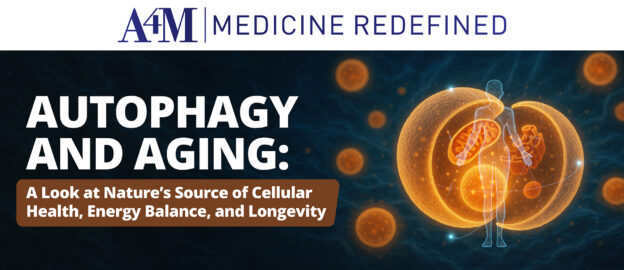
Autophagy is the body’s cellular cleanup process, a method of removing damaged proteins, organelles, and pathogens by encircling them in double-membrane structures called autophagosomes. The autophagosomes fuse with lysosomes, degrading and recycling the damaged cellular material into reusable building blocks like amino acids, fatty acids, and nucleotides to maintain cellular homeostasis, enable metabolic adaptation, and support the cellular stress response. Genetic and experimental evidence shows that longevity paradigms rely on basal autophagic activity, and that activating autophagy may extend lifespan and promote longevity.
A Delicate Balance
The concept that cells degrade and recycle their own components emerged in the 1960s, with the term autophagy (“self-eating”) formally applied to the process in 1963 by Belgian biochemist Christian de Duve, who discovered the role of lysosomes in cellular digestion. In 2016 Yoshinori Ohsumi, PhD, a Japanese cell biologist and professor at Tokyo Institute of Technology’s Institute of Innovative Research, earned the Nobel Prize in Physiology or Medicine after his pioneering yeast experiments revealed the core genes and mechanisms of autophagy, demonstrating how cells recycle under stress.
“Life is maintained by a delicate balance between continuous synthesis and degradation,” Dr. Ohsumi once explained, emphasizing the significance of autophagy in maintaining dynamic biological systems.
Triggered by cellular stressors like nutrient deprivation, oxidative stress, or DNA damage, the autophagy process involves the recognition and sequestration of damaged or unnecessary cellular components and the formation of autophagosomes around them. The autophagosomes then fuse with lysosomes, small sacs that contain digestive enzymes that work on the contained cellular components until they’re ready to be recycled back into the cytosol to be used for energy or as new cellular components.
Metabolic Lifeline
Autophagy goes beyond waste removal to maintain cellular integrity, and this is where its functions become especially important to longevity science.
Mitophagy selectively targets and eliminates damaged mitochondria. While healthy mitochondria power the body’s cells, malfunctioning mitochondria can leak harmful reactive oxygen species. Their removal helps limit cellular damage, with mitophagy maintaining a healthy and efficient energy supply.
Xenophagy engulfs and destroys intracellular bacteria or viruses that have invaded the cell. The foreign bodies are recognized, isolated, and delivered to the lysosome for destruction as part of the innate immune response.
In one of its most compelling functions, autophagy provides metabolic support during periods of starvation or nutrient deprivation. Non-selective autophagy occurs when external nutrients are unavailable, signaling the cell to break down portions of the cytoplasm and release what is needed for survival. Components like amino acids, which are used to synthesize new proteins or to fuel immediate energy needs, are recycled into the cell, allowing it to adapt and survive.
Autophagy and Longevity
Because mitochondrial dysfunction is one of the core drivers of aging, mitochondrial autophagy is of particular interest to longevity scientists. Autophagy supports insulin sensitivity and mitochondrial quality control, contributes to immune resilience, and counteracts multiple aging-related declines; impaired autophagy and the accumulation of damaged cellular components are also implicated in neurodegenerative diseases such as Alzheimer’s and Parkinson’s.
During aging, cells throughout the body can enter a state of senescence, and senescent cells can contribute to chronic inflammation – but understanding how autophagy interacts with cellular senescence and the clearance of damaged cellular components may provide another avenue for promoting healthier aging.
Longevity medicine is increasingly targeting autophagy, with researchers investigating pharmacological inducers such as rapamycin and urolithin A alongside lifestyle interventions such as fasting and exercise to determine whether increasing autophagic activity can produce meaningful benefits for healthspan and lifespan.
Aging – the cumulative, multilevel functional decline of an organism over time – starts at the cellular level and occurs as a dynamic network of interactions. Autophagy can affect these interactions in positive ways, intercepting cellular failure and slowing the rate of decline in interconnected ways:
- Cellular recycling: Autophagy removes damaged mitochondria, aggregated proteins, and intracellular pathogens.
- Disease prevention: Failure to clear damaged components can contribute to oxidative stress, proteostatic collapse, and chronic inflammation.
- Lifespan regulation: In model organisms, autophagy activation has consistently been associated with lifespan extension; restoring autophagic activity in mice has also improved multiple aging phenotypes.
Several clinical trials are actively exploring the therapeutic potential of modulating autophagy, while gene and biological therapies are attempting to influence the autophagy pathway to enhance the ability of cells to maintain themselves and respond to stress.
Diet and Autophagy
External factors can influence the rate of cellular recycling, which is why diet and exercise are so important. The primary regulatory pathway to autophagy involves two cellular energy sensors: AMP-activated protein kinase (AMPK) and mechanistic target of rapamycin (mTOR). When energy is abundant, mTOR is active and suppresses autophagy, favoring growth and protein synthesis. When energy levels drop, AMPK is activated, which inhibits mTOR and promotes the induction of autophagy.
While a healthy diet is essential for healthy aging, caloric restriction has been found to activate AMPK and increase the rate of mitochondrial protein synthesis in older individuals. Studies have shown that caloric restriction – reducing daily energy intake below the body’s requirements without causing malnutrition – significantly promoted mitochondrial biogenesis and improved mitochondrial electron transport chain activity, especially in skeletal muscle and liver tissues of aging mice.
Fasting, particularly intermittent or prolonged fasting, can trigger AMPK because it lowers the availability of nutrients such as amino acids and glucose. Intermittent fasting protocols, such as time-restricted eating, leverage this mechanism by creating regular periods of nutrient scarcity to potentially enhance cellular cleanup.
Researchers have also found that the ketogenic diet can promote mitochondrial autophagy and protein renewal while enhancing fat β-oxidation capacity, optimizing tricarboxylic acid cycle fluxes, and potentially addressing some of the age-related decline in mitochondrial metabolic efficiency.
Finally, while exercise is known for its role in healthy functioning and treating diseases, it can also significantly promote mitochondrial biogenesis and support metabolic health.
Concluding Thoughts
Looking within the body to increase longevity and improve healthspan offers dynamic and sustainable ways to mitigate the effects of aging, and autophagy is emerging as an important area of research in that effort. As scientists continue to explore how the body’s cellular recycling system changes with age – and whether it can be safely modulated – autophagy may offer new insights into the mechanisms underlying healthy aging and age-related disease.
For cutting-edge breakthroughs in longevity medicine, health optimization, and the future of patient care, join the global community of healthcare professionals, researchers, and industry leaders at A4M Longevity Fest 2026 in Las Vegas.
Sources:

Targeting Mitochondrial Autophagy for Anti-aging

Role of Autophagy in Aging: The Good, the Bad, and the Ugly

Autophagy and Longevity

How Autophagy Works: The Science of Cellular Self-Cleaning

Autophagic Mechanisms in Longevity Intervention: Role of Natural Active Compounds

Meet Yoshinori Ohsumi, the Man Who Found Evidence for Autophagy