

Author Archives: Zuzanna Walter

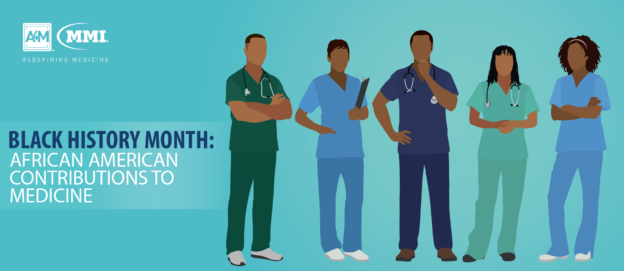
Black History Month: African American Contributions to Medicine

The month of February celebrates Black History Month, a tribute to African American men and women whose achievements helped shape U.S. history. As part of this annual commemoration of their successes, we honor the profound contributions of African American physicians and health care professionals in the medical field. The following pioneers were instrumental in advancing modern medicine; they not only fought slavery and advocated for racial equality, but also contributed groundbreaking research and novel approaches to patient care that have shaped the clinical practice of today.

Rebecca Lee Crumpler, MD

Dr. Rebecca Lee Crumpler became the first African American woman in the United States to earn a medical degree; she graduated from the New England Female Medical College in Boston in 1864. Afterward, Crumpler worked with other African American physicians caring for formerly enslaved people in the Freedmen’s Bureau. In 1883, she published A Book of Medical Discourses: In Two Parts, a text that details children’s and women’s health intended to spread medical knowledge to mothers.

James McCune Smith, MD 

New York City native physician and scholar Dr. James McCune Smith was the first African-American man to earn a medical degree. After being denied college admission in the United States, Dr. Smith pursued a medical degree in Scotland, which he obtained in 1837. Smith was the first African American physician to publish articles in American medical journals, including texts on science, education, and racism. He was also the first African American to own and operate a pharmacy in the United States.

Myra Adele Logan, MD

Dr. Myra Logan was the first woman and ninth person in the world to perform open-heart surgery in 1943. Her research efforts focused on antibiotic and breast cancer studies; she helped developed more accurate testing measures to detect density differences in breast tissue. Dr. Logan also worked as a surgeon at the Harlem Hospital in New York and was the founding partner of the first physicians group practice in America.

Charles Richard Drew, MD 

Dr. Charles Drew was the first physician to use blood plasma for transfusion, pioneering methods of storing blood and developing the first large-scale blood bank in the United States during WWII. He received his M.D. and Master of Surgery from McGill University in 1932. Dr. Drew was the first Director of the American Red Cross Blood Bank, served as Chief Surgeon at Freedmen’s Hospital, and became the first African American examiner of the American Board of Surgery.

Mary Eliza Mahoney 

Mary Eliza Mahoney began her groundbreaking nursing career as an untrained practical nurse serving affluent white families in New England. Mahoney was the first African American professional nurse as well as the first African American to be admitted into the nurse training program at the New England Hospital for Women and Children. Upon graduating, she went on to work as a private care nurse before co-founding the National Association of Colored Graduate Nurses. Largely due to her efforts, the number of African American nurses doubled from 1910 to 1930 and she made history by raising the status of nurses of color in the profession for decades to come.

Leonidas Harris Berry, MD

A renowned gastroenterologist, Dr. Leonidas Harris Berry was the first African American physician on staff at the Michael Reese Hospital in Chicago. Dr. Berry directed his efforts at promoting racial equality in the hospital setting and increasing the amount of facilities in underserved parts of the city. In 1970, Berry helped organize a group of practitioners – called the Flying Black Medics – who flew to the remote community of Cairo, Illinois to bring medical care and health education to the population.

Patricia Era Bath, MD

As the first African American to complete an ophthalmology residency, Dr. Patricia Era Bath noticed disparities in the rates of blindness and visual impairments between white-dominated Columbia eye clinic and the primarily black patient base of Harlem Hospital’s clinic. Dr. Bath conducted a study that found the prevalence of blindness was two times higher in African Americans than in whites, a finding she investigated for the remainder of her career. Later on, Bath co-founded the American Institute for the Prevention of Blindness and became the first woman appointed chair of ophthalmology at an American medical school. Dr. Bath was also the first African American physician to receive a medical patent in 1988 for the Laserphaco Probe – a device for cataract surgery.

Alexa Irene Canady, MD

Dr. Alexa Irene Canady became the first African American neurosurgeon in the United States in 1981. Shortly thereafter, she was appointed the chief of neurosurgery at the Children’s Hospital of Michigan, where she worked for decades in the pediatric department. She is revered for her patient-focused approach to care, which allowed her the opportunity to grow her career exponentially in spite of prevailing racial tension.

Regina Marcia Benjamin, MD, MBA

Best known as the 18th U.S. Surgeon General, Dr. Regina Marcia Benjamin spent most of her early career working in rural southern communities. She founded the BayouClinic in Bayou La Batre, Louisiana, to provide clinical care, social services, and medical education to residents of the rural town – which proved particularly necessary after Hurricane Katrina in 2005. Dr. Benjamin was also responsible for the USA Telemedicine distance learning program – a medical education and specialty health care telecommunications platform serving patients and physicians in underserved communities.

As some of history’s most notable medical professionals, these pioneers and their immense contributions have helped advance the practice of modern medicine while also promoting racial equity both in the health care setting and in access to clinical care. Together, they paved the way for forthcoming efforts which aim to mitigate disparities in health outcomes between African Americans and other racial groups, alleviating the disproportionate burden this demographic currently faces.

Ketone-Rich Diets May Reduce Alzheimer’s Disease Risk

In the early stages of development, Alzheimer’s disease (AD) causes overactive brain functioning, potentially as a result of the loss of inhibitory – GABAergic – interneurons that control the signaling of other neurons in the circuit. Interneurons require more energy compared with other neurons, which makes them more susceptible to degeneration upon encountering the Alzheimer’s disease protein – amyloid beta. Research has shown the negative impact of amyloid beta interaction , revealing its ability to damage mitochondria by interfering with SIRT3 – a protective protein.

Impaired mitochondrial function and abnormal neuronal network activity are thought to be some of the early signs of the development of Alzheimer’s disease, however, how mitochondrial alterations contribute to the abnormal activity in neural circuits and their connection to AD remains unknown.

SIRT3 in Mice with Alzheimer’s Disease 

In a recent study published in the Journal of Neuroscience, Aiwu Chang, PhD, and her colleagues investigated the function of the mitochondrial protein by genetically reducing the levels of SIRT3 in mouse models of Alzheimer’s disease. Per their findings, mice with low levels of SIRT3 experienced a significantly higher mortality rate, more violent seizures, and increased interneuron death compared with mice from the standard Alzheimer’s disease model as well as the control group. Both male and female mice were observed to die prematurely before 5 months of age.

On the other hand, mice with reduced levels of SIRT3 who consumed a ketone-rich diet experienced fewer seizures and were less likely to die. Consuming the fatty acid also increased levels of SIRT3 in these mice.  “When comparing male mice among different genotypes, SIRT3 haploinsufficiency renders GABAergic interneurons in the cerebral cortex vulnerable to degeneration and associated neuronal network hyperexcitability,” researchers wrote.

In short, SIRT3 proteins work to preserve GABAergic interneurons and protect cerebral circuits against hyperexcitability; this neuroprotective mechanism can potentially be reinforced by dietary ketone intake.

Ketone Consumption for Risk Reduction

The latest findings implicate that the consumption of ketones may be a way of protecting interneurons and delaying the progression of Alzheimer’s disease. By preserving mitochondrial function, SIRT3 protects interneurons against amyloid beta-induced dysfunction ad degeneration in mice with Alzheimer’s disease. According to Dr. Chang and her team, “the neuronal network dysfunction that occurs in Alzheimer’s disease can be partially reversed by physiological, dietary, and pharmacological interventions to increase SIRT3 expression and enhance the functionality of GABAergic interneurons.”

Due to the growing popularity of the ketogenic diet – which can support weight loss, diabetes management, and several other health conditions – there is an increased awareness and availability of ketone-rich foods. Limiting carbohydrate consumptions and incorporating ketone-rich foods such as seafood, low carb vegetables, high-quality meat and poultry, and eggs into the diet may prove to have neuroprotective effects.

The study’s findings implicate the potential benefit of ketone consumption; however, the results need to be verified in human studies before any recommendations can be made. Further research is necessary to determine whether a ketogenic diet in humans may reduce Alzheimer’s disease risk and to what degree.

Rising Rates of Uninsured Americans Threaten Health Outcomes

Changes in the prevalence of health insurance coverage and the distribution of coverage types are closely tied to shifts in economic trends, demographic composition and policy changes affecting access to care. Within the United States, a lack of health insurance coverage has been a persistent problem, despite the introduction of the Affordable Care Act (ACA) in 2010. Although these policy changes led to the growth of the share of insured Americans, current trends reveal that coverage is yet again on the decline.

Recently released by the Census Bureau, the 2018 Health Insurance Coverage in the United States report presents the state of health insurance coverage in the United States in 2018, revealing worrying changes in insurance trends between 2017 and 2018.

Decline in Number of Insured Individuals

According to the latest data from the Census Bureau, the percentage of Americans without health insurance rose for the first time in nearly a decade. In 2018, the rate of individuals without coverage increased to 8.5% – up 0.5% from the previous year – which is the equivalent of 27.5 million uninsured Americans. Overall, the percentage of people with health insurance coverage for all or part of 2018 in the United States was 91.5%, compared with 92.1% in 2017. The decline was also evidenced in the number of insured children – which dropped by 425,000.

Who Are the Uninsured?

Most members of the uninsured population come from low-income families, with at least one worker in the family, and tend to live in states with limited access to Medicaid. In 2018, 45% of uninsured non-elderly adults remained uninsured due to the high cost of health care coverage. Many members of the uninsured population do not have access to insurance through their employment, while others remain ineligible for financial assistance for coverage.

The growing uninsured, low-income population faces not only a lack of access to health care, but also unaffordable medical bills, which translate to medical debt. In 2018, uninsured non-elderly adults were twice as likely as their insured counterparts to have issues paying their medical bills.

The latest data also reports a significant increase in the share of Hispanic individuals without health insurance coverage, which grew to 8.7% from the prior year – the most significant change in any racial group. People of color faced a higher risk of being uninsured than their non-Hispanic white counterparts; while they make up 43% of the total non-elderly U.S. population, people of color account for over half of all non-elderly uninsured Americans, according to data from the Kaiser Family Foundation.

Furthermore, the report reveals a drop in the rate of children with health insurance coverage. More children were uninsured in 2018 than in the prior year; approximately 4.3 million children were uninsured last year – up from 425,000 in 2017. The decline in the share of lower-income children covered by Medicaid or the Children’s Health Insurance Program is in part due to the decreasing accessibility of these programs and rising costs of health insurance coverage.

Private Health Insurance Remains Steady

In 2018, private health insurance continued to be more prevalent than public health coverage and covered over 67% of the population. Employer-based insurance remains the most common form of private health insurance, covering 55.1% of the population. While the percentage of individuals with private health coverage did not statistically change within the past year, there was a notable decline in the number of people covered by Medicaid as the program becomes less accessible due to policy changes. However, the share of individuals covered by Medicare increased between 2017 and 2018 as a result of the growing aged population.

The recent trends revealed in the latest Census Bureau report show that the insurance coverage gains afforded by the Affordable Care Act are receding. Despite nationwide declines in poverty and unemployment rates, this is the first increase in the number of Americans without health insurance coverage to occur since 2009 and since the ACA was passed in 2010. While a variety of proposed public policy solutions are currently being contested, an increase in uninsured individuals threatens improvements in access to care as well as overall population health outcomes and requires urgent repair.