

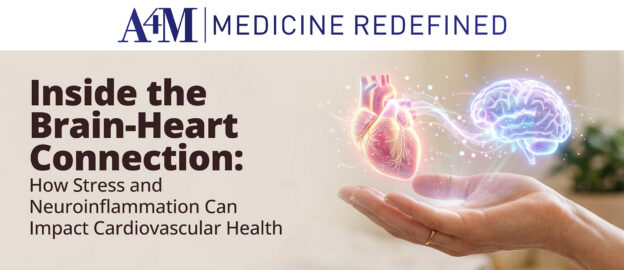
The mind and body may seem like two distinct entities, but emerging research shows a brain-heart connection that challenges that perception. Clinical evidence is mounting that cardiovascular health affects cognitive health, and that the brain and heart engage in a profound, intricate dialogue that influences healthspan, longevity, and overall well-being, suggesting that preventive efforts for one can translate to the other. As research in this area expands, scientists are uncovering information that could help boost healthy aging, allow for more personalized, tailored treatments, and ultimately reduce rates of dementia.
Single Dynamic Network
“The mind-heart connection is part of the broader mind-body relationship, but it’s uniquely powerful,” observes Mohamad Alkhouli, M.D., an interventional cardiologist at Mayo Clinic in Rochester, Minnesota, who is researching the relationship between the brain and the heart. “Emotional states like anxiety, grief, or even joy can directly influence heart rhythms, blood pressure, and even the risk of heart attacks.”
Dr. Alkhouli says that the brain-heart connection goes both ways.
“At the same time, the heart sends signals back to the brain through nerves, hormones, and pressure receptors – affecting our mood, attention, and stress levels,” he explains. “So, it’s not just the brain talking to the heart; the heart talks back.”
Dr. Alkhouli has been part of Mayo Clinic research teams exploring conditions with a brain-heart connection, including spontaneous coronary artery dissection (SCAD) and stress-induced cardiopathy (SICM) – also known as broken heart syndrome – as well as hypertension, heart disease, atrial tachycardia, and bradycardia.
“What fascinates me most is how deeply intertwined our emotional and cardiovascular systems are, and how much we still don’t understand,” he says. “Could we one day ‘rewire’ this connection for healing, using therapy, neuromodulation, or even digital tools? At Mayo Clinic, we’re exploring these questions, and we’re beginning to see the heart and brain not as separate organs, but as a single, dynamic network.”
Paying the Cost
The World Health Organization calls heart disease the number one cause of death worldwide, and depression the “single largest contributor to global disability.”
In the United States alone, chronic diseases have been estimated to cost $37 trillion a year, or almost 20 percent of the nation’s GDP, in direct expenses and lost productivity.
“Both mental health and heart disease make up a large share of that,” says Jill Goldstein, an HMS professor of psychiatry and medicine and founder and executive director of the Innovation Center on Sex Differences in Medicine at Massachusetts General Hospital. “And when they co-occur, the cost increases even further. These disorders are also major risk factors for Alzheimer’s disease and the aging brain, so if we do not target them early to prevent what’s coming down the road for our aging population, they could tank our economy.”
Solid research now links PTSD, anxiety, depression, Parkinson’s disease, bipolar disorder, and schizophrenia to increased risk of cardiovascular disease (CVD), and studies associate CVD with impaired cognition, white-matter damage, cerebrovascular disease, and dementia. According to the Alzheimer’s Association, postmortem studies show that as many as eight in ten patients with Alzheimer’s disease also have cardiovascular abnormalities.
And, once again, the relationship goes both ways: A study in the Journal of the American Heart Association found that the higher a person’s 10-year cardiovascular risk score, the worse they scored on tests for cognitive function, adding to a large body of evidence suggesting that controlling heart-health risk factors may help protect brain health.
Facing the Risk Factors
With the brain-heart connection in mind, taking preventative action becomes slightly less complicated, as the same healthy habits can benefit both organs.
“The good news is that what’s good for your mind is often good for your heart, and vice versa,” Dr. Alkhouli explains. His recommendations include:
- Managing stress.
- Getting quality sleep.
- Staying socially connected.
- Practicing mindfulness or prayer.
“All have measurable benefits for heart health,” he says. “Likewise, regular physical activity, a heart-healthy diet, and controlling blood pressure and cholesterol can boost mood and cognitive function. It’s a powerful feedback loop: Caring for one supports the other.”
Mitchell S. V. Elkind, M.D., M.S., FAHA, a neurologist and former volunteer American Heart Association president and currently its chief clinical science officer, concurs.
“We now know that many of the same health risk factors that cause heart disease and stroke also contribute to a decline in overall brain health,” he says, adding that many modifiable risk factors for cognitive loss, like an unhealthy diet and sedentary lifestyle, develop as early as childhood and adolescence. As we age, he continues, our ability to remember, problem-solve, think, and communicate decreases.
“Just like with heart disease and stroke, most brain disease is preventable. However, the combination of an aging population and projected substantial increases in high blood pressure, obesity, and diabetes are likely to lead to unprecedented growth in many types of brain disease.”
Concluding Thoughts
As science continues to explore the complex collaboration between the brain and the cardiovascular system, the basics of longevity science still apply. Physical exercise, a healthy diet, and effective stress management form the foundation of healthspan and healthful longevity, supplemented with evidence-based treatments when proactive measures are insufficient.
Sources:

The Brain-Heart Connection: How One Impacts the Other

The Brain-Heart Connection

Higher Cardiovascular Risk Score Linked to Lower Cognitive Function

The Brain-Heart Connection: Mayo Clinic Expert Explains Powerful Tie That Works Both Ways

Boost Brain Health by Following Your Heart: Simple Steps for Longevity

The Brain-Heart Connection: How Stress and Neuroinflammation Shape Cardiovascular Health